Complex intersections start when the protected left is gone
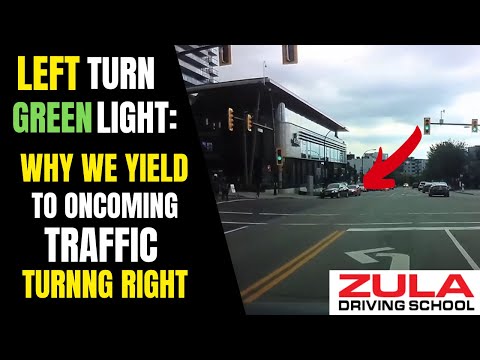
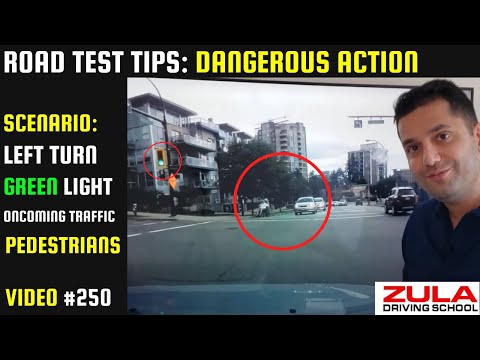
This lesson focuses on left turns at a regular green light, where you do not have a protected left arrow and must negotiate with oncoming traffic, cyclists, and pedestrians.
This video explains how to handle complex intersections when you are turning left without a protected left-turn arrow. The key is knowing when to proceed, when to enter the waiting position, and how to clear safely when the light changes. For North Vancouver learners, these habits matter on busy traffic-signal turns: keep the wheels straight, monitor the light, oncoming traffic, pedestrians, and rear-view mirror, and never turn until you know the gap is safe.
The lesson covers regular green left turns, waiting position, why the wheels stay straight, yellow-light roll-forward judgment, red-light clearing, and why you only go when you can see for yourself.
Use these sections as a quick study guide before practising unprotected left turns, especially at busy intersections where the light may change while you are waiting.
This lesson focuses on left turns at a regular green light, where you do not have a protected left arrow and must negotiate with oncoming traffic, cyclists, and pedestrians.
The driver has to read the light, the oncoming traffic, the crosswalks, and the space behind before choosing whether to turn, wait, roll forward, or clear the intersection.
If the light is green, there is no oncoming traffic or cyclist, and no pedestrian is approaching the crosswalk, you can make the left turn without stopping in the intersection.
If cars, cyclists, or pedestrians are approaching, enter the waiting position instead of forcing the turn. Treat pedestrians crossing either direction as a reason to wait.
In the waiting position, keep the back wheels around the crosswalk area and keep the front wheels straight. That position leaves room to respond as the light changes.
While waiting, keep cycling through four checks: light colour, oncoming traffic, pedestrians, and your rear-view mirror. Do not stare at only one part of the intersection.
If a vehicle behind is not stopping, straight wheels let you abandon the turn and continue forward. Turned wheels can push you into oncoming traffic if you are rear-ended.
A left turn usually takes three or four seconds, so approaching vehicles should be far enough that they do not have to slow down for you.
If the light turns yellow while oncoming traffic is still moving, do not cut in front of them. Roll forward in a straight line and turn only once you know they are stopping.
Waiting farther back gives you rolling room when the light changes. It also shows the examiner you understand the next step and are not frozen in the intersection.
If the light turns red after you have rolled forward and oncoming traffic has stopped, finish clearing the intersection. If someone runs into the crosswalk, stop before the crosswalk area and wait.
Do not follow another left-turning vehicle into the intersection unless you know they are about to turn. If their turn takes the whole light cycle, you can get trapped behind them.
If a bus or large vehicle blocks your view, do not lean into oncoming traffic or obey a honk from behind. You are responsible for knowing it is safe before you turn.
If you freeze in the waiting position and the light changes, do not put the car in reverse. Reversing in an intersection is illegal and unsafe; the answer is better planning on approach.
More videos that work on the same skills.
Guides and lessons for where you're starting from.
Book a driving lesson in North Vancouver with Zula Driving School and practise unprotected left turns, waiting positions, yellow-light decisions, pedestrian checks, and safe gap judgment with a local instructor.